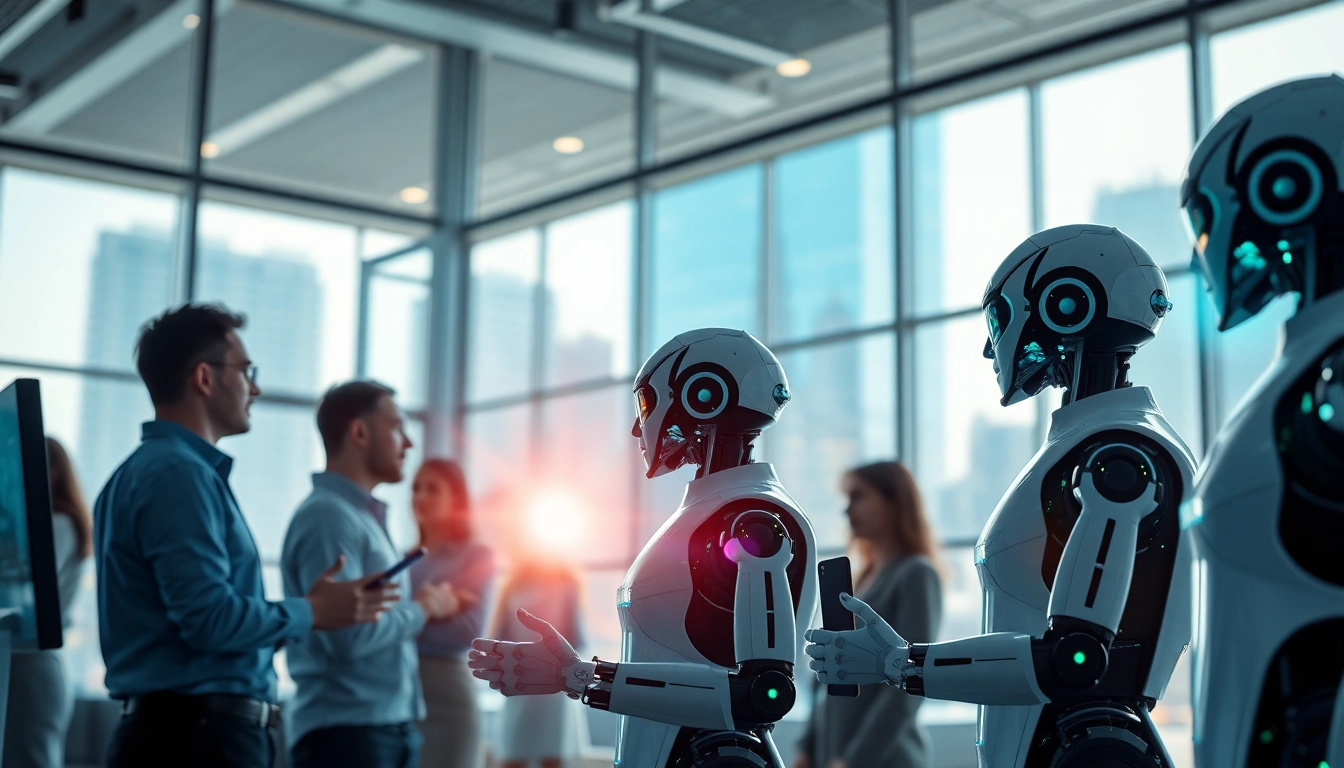
Understanding Ai Bots and Their Role
What are Ai Bots?
Ai Bots, short for Artificial Intelligence Bots, are software applications that utilize artificial intelligence to perform tasks autonomously or semi-autonomously. These tasks may range from simple interactions, such as answering frequently asked questions, to more complex processes like data analysis and decision-making. Their ability to learn and adapt over time makes Ai Bots increasingly valuable across various industries.
Common Applications of Ai Bots
Ai Bots find use in diverse sectors, each leveraging their capabilities for specific purposes:
- Customer Support: Chatbots handle inquiries, provide information, and resolve issues, enhancing customer experience.
- Marketing Automation: Ai Bots analyze consumer behavior and preferences, allowing for targeted marketing campaigns.
- Data Analysis: These bots can process vast amounts of data quickly, extracting actionable insights that inform business strategy.
- Virtual Assistants: Ai Bots assist users in managing schedules, reminders, and other personalized tasks.
Importance of Ai Bots in Modern Workplaces
The integration of Ai Bots into workplace environments is not merely a trend but a significant shift toward enhanced productivity and efficiency. Organizations can automate routine tasks, allowing human employees to focus on higher-value activities. Moreover, Ai Bots can operate 24/7, providing consistent performance that human labor cannot match, thereby ensuring that businesses remain responsive to customer needs and market demands.
Benefits of Implementing Ai Bots
Increased Productivity
One of the most significant benefits of Ai Bots is their capacity to enhance productivity. By automating repetitive tasks, these bots free up employees' time, enabling them to engage in more complex and creative work. According to recent surveys, workplaces that have integrated Ai Bots report a productivity increase of up to 40%, showcasing their potential to revolutionize how businesses operate.
Cost Efficiency
Implementing Ai Bots can lead to substantial cost savings. Organizations can reduce labor costs while maintaining or enhancing service levels. Ai Bots can operate continuously without downtime, minimizing operational expenses associated with human resources. This cost efficiency extends not only to labor but also to error reduction and the optimization of resource allocation.
Enhanced Decision-Making
Ai Bots contribute to improved decision-making processes by providing real-time data analysis and insights. By leveraging machine learning algorithms, these bots can identify trends and patterns that may go unnoticed by human analysts. With data-driven decisions, organizations can enhance their strategic planning and operational effectiveness, leading to better outcomes.
Challenges in Integrating Ai Bots
Technical Barriers
While Ai Bots offer numerous advantages, their integration can present technical challenges. Organizations may face issues related to compatibility with existing systems, data management, or the need for specialized technical expertise. Overcoming these barriers often requires a robust implementation strategy and investment in proper infrastructure.
Cultural Resistance
Human resistance to change is a common hurdle when integrating Ai Bots into the workplace. Employees may fear job displacement or lack understanding of the technology. To smooth the transition, organizations must foster a culture of continuous learning and provide training to help employees adapt to new roles that involve Ai Bots.
Data Privacy Concerns
As Ai Bots work with sensitive information, data privacy remains a critical concern. Ensuring compliance with regulations, such as GDPR, is essential. Organizations must prioritize data protection strategies and educate users about responsible Ai Bot interaction to minimize privacy risks.
Best Practices for Effective Ai Bots Deployment
Identifying Needs and Goals
Before deploying Ai Bots, organizations should thoroughly assess their needs and objectives. Identifying specific pain points and setting clear goals will facilitate the design and implementation of Ai Bots that truly meet business demands. Engaging stakeholders in this process can yield valuable insights into functional requirements.
Training and Support for Users
For Ai Bots to be effective, end-users must be trained adequately. Providing support resources ensures that employees feel comfortable using the technology, thus enhancing user adoption and confidence. Regular training sessions and updates can also keep employees informed about the latest features and improvements.
Continuous Monitoring and Improvement
The deployment of Ai Bots is not a one-time event; it requires ongoing monitoring and refinement. Organizations should track performance metrics, user feedback, and system accuracy to identify areas for improvement. This iterative approach not only optimizes functionality but also aligns Ai Bots with evolving business needs.
Measuring the Impact of Ai Bots
Key Performance Indicators
To assess the effectiveness of Ai Bots, organizations should define relevant Key Performance Indicators (KPIs). Metrics such as task completion rate, response time, and user engagement levels are crucial for evaluating bot performance. Establishing benchmarks helps in understanding the contributions of Ai Bots towards achieving business goals.
User Satisfaction Surveys
User feedback plays a pivotal role in measuring the impact of Ai Bots. Conduct surveys to gather insights on user experience and satisfaction. Understanding users' perspectives can inform necessary adjustments and enhancements, ultimately leading to improved service delivery and user engagement.
Return on Investment Analysis
Finally, organizations should perform a Return on Investment (ROI) analysis to evaluate the financial success of Ai Bot integration. By comparing the costs of implementation against the benefits gained—such as increased sales, reduced operational costs, and enhanced productivity—organizations can make informed decisions regarding future investments.
FAQs About Ai Bots
What industries can benefit from Ai Bots?
Almost all industries can benefit from Ai Bots, especially customer service, healthcare, finance, and marketing. Their adaptability allows them to enhance operations across various sectors.
How can businesses choose the right Ai Bot?
Businesses should start by identifying their specific needs and objectives. Then, they can select Ai Bots that cater to those requirements, evaluating features, scalability, and integration capabilities.
Are Ai Bots expensive to implement?
The cost of implementing Ai Bots varies based on complexity and features. While initial investments can be significant, the long-term savings and efficiency gains often justify the expenditure.
How do Ai Bots handle sensitive data?
Ai Bots can be designed to comply with data privacy regulations. Implementing encryption and secure access controls are essential to protect user data and ensure compliance with relevant laws.
Can Ai Bots learn from interactions?
Yes, many Ai Bots use machine learning algorithms, allowing them to learn from user interactions and improve over time. This adaptability enhances their effectiveness and user experience.